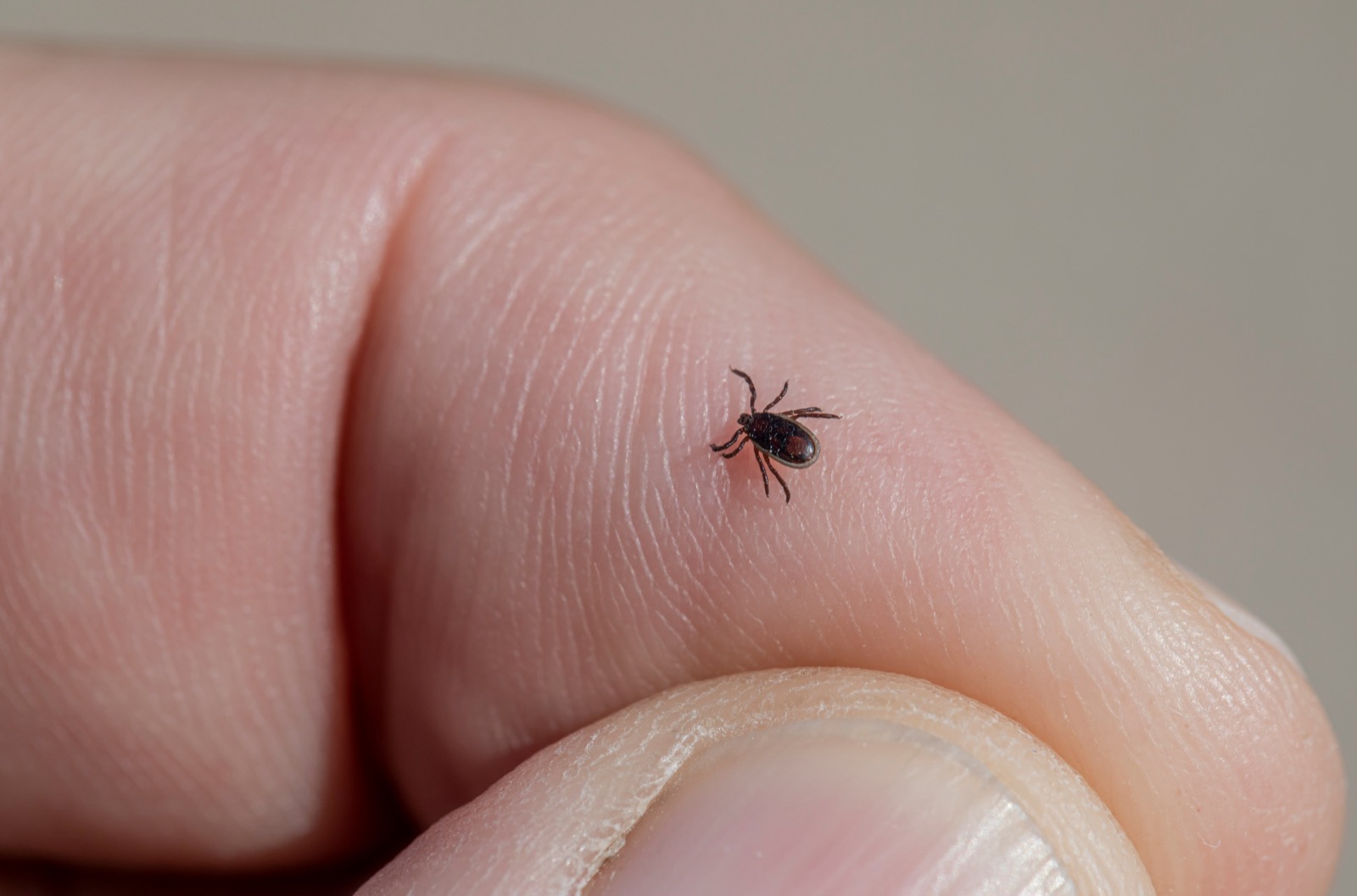
Every spring, someone asks us whether organic or synthetic tick control is better. And every time, I have to resist the urge to give the answer that sounds better. The truth is more complicated, and you deserve to hear it.
This isn't a marketing question. It's a science question. And the science shows that both approaches have real strengths and real limitations. As someone who lives and works in Carroll County, who has properties on three different lakes within view of my office, and who makes the decision every day about what we use on our customers' land, I'm going to walk you through exactly what we know and why we've made the choices we have.
How Synthetic Pyrethroids Work
Synthetic tick control in the professional market typically means pyrethroid insecticides like bifenthrin or permethrin. These are synthetic versions of pyrethrins, compounds found naturally in chrysanthemum flowers. They work by disrupting the insect's nervous system, causing paralysis and death.
The practical upside is real: pyrethroids are highly effective against ticks. Application rates are low, residual activity lasts 3 to 4 weeks or longer depending on the product and formulation, and they've been used successfully in professional pest management for decades. A single application can provide meaningful protection for an entire season on some properties.
The problem is equally real. Pyrethroids are toxic to aquatic invertebrates at low concentrations, and they are also toxic to beneficial insects, including honeybees and bumblebees. This matters more in Carroll County than in most places because we're surrounded by water. Properties bordering Ossipee Lake, Province Lake, Great East Lake, and the tributaries that feed them are especially sensitive. Stormwater runoff picks up pyrethroid residues from treated lawns and carries them into our water systems. Studies have documented pyrethroid presence in sediments from New Hampshire lakes.
Most professional applicators follow good practices to minimize runoff. They don't apply before rain forecasts, they respect buffer zones, and they time applications appropriately. But the fundamental limitation remains: once a pyrethroid is on the soil, runoff is a possibility. And in a sandy, permeable watershed like ours, so is leaching.
How Plant Oil-Based Products Work
Plant oil-based tick control products contain essential oils from plants like rosemary, peppermint, thyme, and clove. These oils work through contact toxicity. They disrupt the insect's exoskeleton, causing rapid dehydration and death upon contact. A tick has to actually touch the treated plant material or soil to be killed.
The practical reality is that plant oils are effective, but differently effective. They provide rapid knockdown of ticks that contact them, but the residual activity is shorter, typically 2 to 3 weeks compared to 3 to 4 for pyrethroids. This isn't a weakness if you plan for it. We build our treatment calendar around the shorter residual, which means we often recommend more frequent applications but at lower concentrations.
The environmental profile is fundamentally different. Plant oils break down rapidly in soil and sunlight. They're not toxic to aquatic organisms at the concentrations we use them. They have low toxicity to beneficial insects like pollinators. What ends up in stormwater or groundwater is a degradable plant extract, not a synthetic pesticide designed to persist.
The Research on Effectiveness
Here's where the marketing narrative and the data part ways for a lot of companies. Plant oil-based products are comparable to synthetic pyrethroids at knockdown efficacy against active ticks. Field trials show similar results. The difference is in residual activity and the degree of protection you get when a tick encounters the treated area days or weeks after application.
A tick contacting a freshly treated lawn with either product will die. That's weeks one and two. By week three, a pyrethroid-treated lawn will still kill most ticks it contacts. A plant oil-treated lawn will kill some but not all. By week four, the differences are more pronounced.
This is why we don't claim that plant oils are superior to pyrethroids. They're not. They're different. They trade longer residual activity for a better environmental footprint and faster degradation.
Why We Use Plant Oils in the Lakes Region
We use plant oil-based tick control because of where we work, not because we think they're universally better than pyrethroids. A property in rural Colorado with no water concerns has a different calculation than a lakefront lot in Tuftonboro.
Many of the properties we treat have a direct relationship to surface water. They're on lakes, or they drain to lakes, or they sit above groundwater that feeds into lakes. For those properties, minimizing the environmental load from our applications is not a nice-to-have, it's the point. We're protecting the water that's the reason people live here in the first place.
The shorter residual is workable because we adjust our schedule. Instead of one or two applications per season, we often recommend three or four, timed specifically around tick activity windows. Early April, late May into June, and again in late August through September. This matches when ticks are most active and when homeowners are most concerned about them anyway.
For customers with specific circumstances where a synthetic product makes sense, we have that conversation. Some properties are far enough from water that the runoff concern is minimal. Some customers have significant property and significant tick pressure and would prefer less frequent applications. Those conversations are real, and we don't push plant oils on someone who has a different priority.
Being Honest About Limitations
Plant oil products aren't perfect. They smell stronger than synthetic formulations, which some customers notice for a few hours after application. They don't provide the long season-long protection that a single pyrethroid application can. If your priority is the absolute maximum protection with the fewest applications, a synthetic product might be a better fit.
Pyrethroids aren't perfect either. They have genuine environmental concerns, especially for aquatic ecosystems. The question isn't whether they're perfect, it's whether they make sense for your specific situation.
Making the Right Choice for Your Property
Here's what we actually do: we walk your property, assess your water exposure, understand your priorities, and talk through the tradeoffs. If you're on a lake or a stream, we usually recommend plant oils. If you're in a more upland location with no surface water concerns, we might recommend a synthetic pyrethroid if you prefer fewer applications. If you're not sure, we start with plant oils and adjust if needed.
The worst choice is doing nothing or making a decision based on marketing claims instead of what actually works where you live. Ticks in Carroll County are real, the diseases they carry are real, and they're worth taking seriously.
What we won't do is tell you that one approach is magically better than the other. Both work. Both have tradeoffs. Your property, your water, your preferences, and your priorities determine which approach makes sense for you.
Ready to Talk About the Right Program for Your Property?
We'll assess your property, your water situation, and your goals, then recommend a tick control approach that matches your priorities.