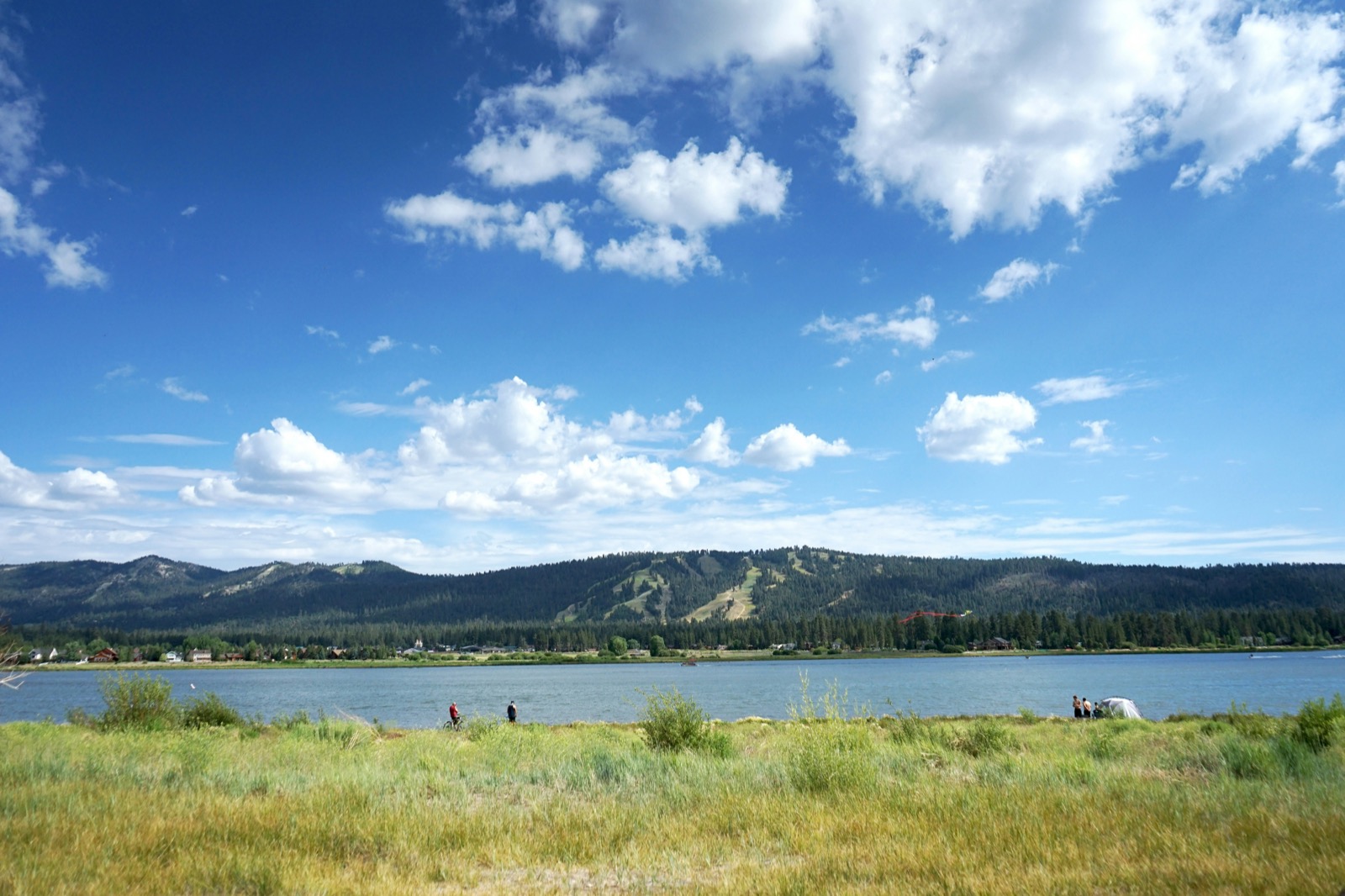
If you own property on or near one of New Hampshire's lakes, you know how precious that water is. It's why you live here. The clarity, the ecology, the simple pleasure of being on a clean lake, these things define life in the Eastern Lakes Region.
That's why it's difficult to watch what's happening to many of our local lakes. Ossipee Lake, Lovell Lake, Great East Lake, and others throughout the region have experienced increasing algae growth over recent decades. The culprit is well-understood: nutrient loading from the surrounding watershed, and lawn fertilizers are a significant contributor.
The Nutrient Runoff Problem
Conventional lawn fertilizers are high in phosphorus and nitrogen. When it rains, water moving across your lawn can carry dissolved nutrients from fertilizer applications directly into storm drains, streams, and ultimately your lake. Even without visible runoff, nutrients can leach through sandy soils (common throughout NH's lake region) into groundwater that flows to the lake.
Once phosphorus and nitrogen enter a lake, they act as fertilizer for algae. The result: algae blooms that cloud the water, deplete oxygen levels, harm fish and aquatic life, and can produce toxic cyanobacteria (blue-green algae) that makes swimming dangerous and kills wildlife.
This isn't a hypothetical problem. It's happening in New Hampshire right now, and residential lawn care is one of the contributing factors that's within our control to change.
The False Choice: Lawn vs. Lake
Many lakefront homeowners feel like they have to choose between a healthy lawn and a healthy lake. They've heard that fertilizing is bad, so they either stop fertilizing altogether (and watch their lawn deteriorate) or they fertilize as usual and feel guilty about it.
This false choice frustrates us, because it's not accurate. The problem isn't fertilizing per se. It's how you fertilize. Done right, with the right products, the right timing, and the right approach, you can maintain a lush, green, healthy lawn with minimal impact on your lake.
How Our Lake-Friendly Program Works
Our lake-friendly lawn program is built around several key principles that collectively reduce nutrient runoff dramatically without sacrificing lawn quality.
1. Soil Testing First
The number one cause of unnecessary phosphorus application is fertilizing without a soil test. Most established lawns don't need added phosphorus. They have plenty already. By testing your soil first, we only apply phosphorus when a true deficiency exists. This alone can eliminate phosphorus applications entirely from many lakefront properties.
2. Phosphorus-Free Maintenance Fertilizers
For nitrogen applications (which lawns do need regularly), we use phosphorus-free formulations, fertilizers with a middle number of "0" on the N-P-K label (e.g., 30-0-6). This provides the nitrogen your lawn needs for growth and color without loading additional phosphorus into the watershed.
3. Slow-Release Nitrogen Sources
Fast-release nitrogen is more prone to leaching and runoff, as it's available all at once and what the lawn can't immediately use is at risk of loss. Slow-release nitrogen formulations feed the lawn gradually over weeks, closely matching the plant's uptake rate and dramatically reducing loss to the environment.
4. Application Timing
We never apply fertilizer before predicted heavy rain events, to frozen ground, to saturated soils, or in close proximity to the shoreline. Timing applications when the lawn can actually absorb the nutrients, not when conditions are set up for runoff, makes an enormous difference in what stays on your lawn versus what leaves it.
5. Dense Turf as Protection
Here's the counterintuitive part: a thick, healthy lawn is actually one of the best tools for protecting water quality. Dense turf slows water movement across the soil surface, increasing infiltration and reducing runoff velocity. A thin, weedy lawn with bare patches has higher runoff rates than a well-maintained one.
This is one reason why completely stopping fertilization often makes the water quality problem worse, not better. A declining lawn has more bare ground, less root mass, and higher runoff.
6. Shoreline Buffer Considerations
For properties with a direct shoreline, we work with NH-recommended buffer zone guidelines and avoid applications near the water's edge. A well-maintained vegetated buffer, even just a few feet of native grasses or plants, provides additional filtration before water reaches the lake.
What Our Customers Say
Customers who've switched to our lake-friendly program frequently tell us two things: they can't believe how good their lawn looks, and they feel genuinely good about their environmental footprint. The two outcomes aren't in conflict. They're achieved together through the same approach.
For lakefront property owners who care about both their lawn and their lake, this program is the right choice.
NH's Lake-Friendly Landscaping Initiative
New Hampshire's lakes organizations and the NH Department of Environmental Services actively promote lake-friendly landscaping practices. Our program is built in alignment with these recommendations. If you've been curious about how to participate in the broader effort to protect NH's lakes, this is a meaningful, practical step you can take on your own property.
Is the Lake-Friendly Program Right for You?
If any of the following apply, this program is worth a conversation:
- You own lakefront property or property draining to a lake or pond
- You live in a watershed that has experienced algae blooms
- You have a well and care about groundwater quality
- You want to do your part for NH's water quality
- You're concerned about the environmental impact of conventional lawn care
The program doesn't require sacrificing your lawn. It requires a smarter approach, starting with a soil test and using products and practices that are designed to work with the environment, not against it.
Give us a call. We'll walk your property, assess your specific situation, and put together a recommendation that makes sense for you.
Interested in Our Lake-Friendly Program?
We serve lakefront and waterfront properties throughout the Eastern Lakes Region. Contact us for a free consultation. We'll assess your property and soil, then design a program that protects both your lawn and your lake.