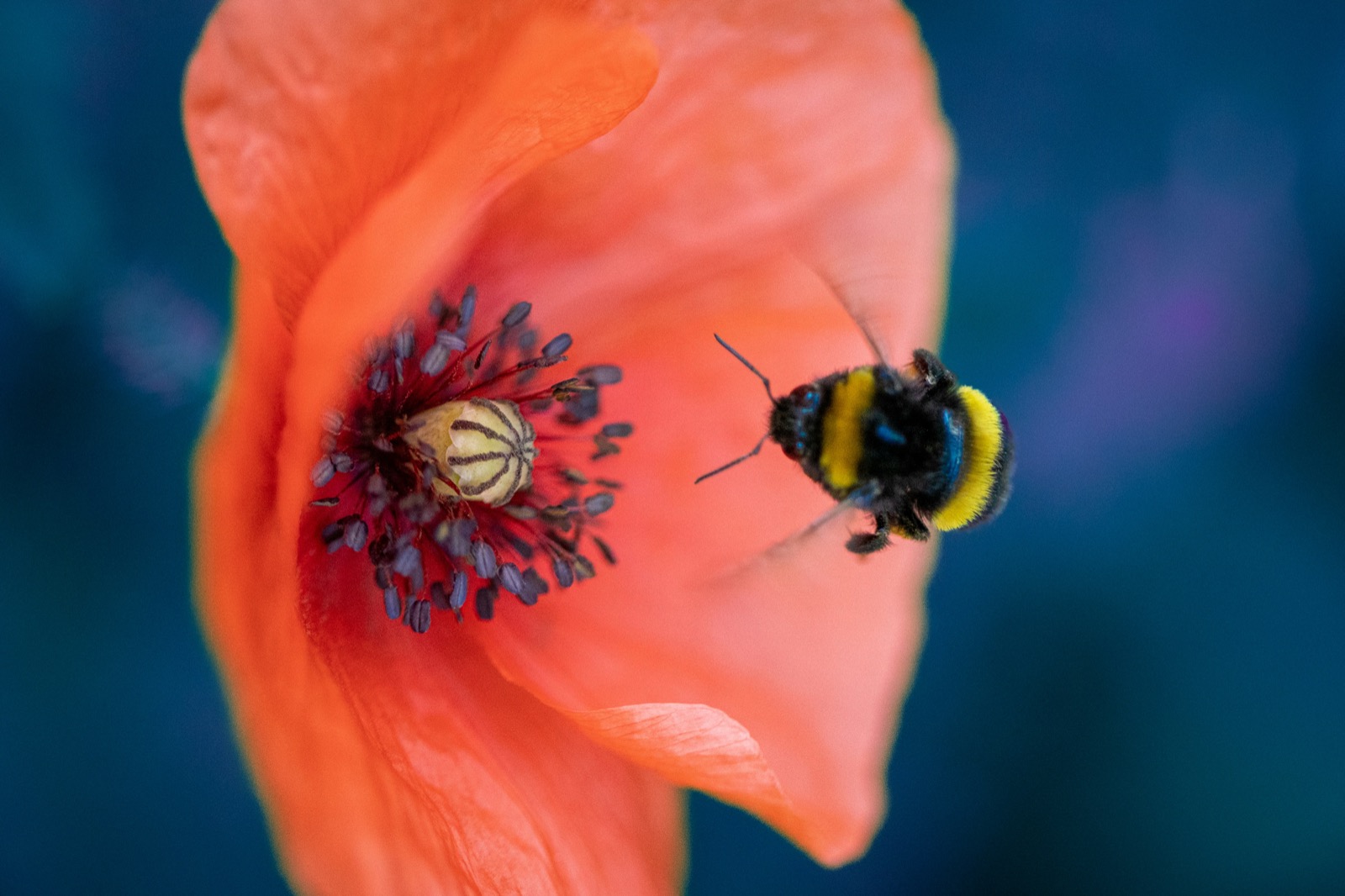
When most people think about lawn care or pest control, bees aren't the first thing that comes to mind. But they should be. The decisions we make about what products to use, or not use, in our yards have real consequences for pollinator populations, and those consequences ripple through the entire ecosystem.
At Royle Turf & Tick, our commitment to pollinator health isn't a marketing line. It's one of the core reasons we made a deliberate decision to never use synthetic pesticides for tick and mosquito control, even when customers ask about conventional options.
Why Bees Matter to Your Yard
Honeybees and native bees are among the most important animals on Earth. They pollinate an estimated one-third of all food crops that humans consume, and they're responsible for the reproduction of countless wild plant species that form the foundation of ecological food webs.
But beyond agriculture, bees matter to your specific yard. If you have a vegetable garden, fruit trees, berry bushes, or flowering ornamentals, bees are your silent business partners. Without them, pollination drops, fruit set fails, and the beautiful, lively yard you've worked to create becomes quieter and less productive.
Here in New Hampshire's lakes region, we also have abundant native bee species, including bumblebees, mason bees, sweat bees, and more, that play equally critical roles in the local ecosystem. These species nest in the ground, in hollow plant stems, and in wood cavities. They don't have a commercial beekeeper looking out for them. They depend entirely on the health of the landscapes where they live.
The Problem with Conventional Pest Control
Conventional tick and mosquito control programs typically use synthetic pyrethroids (like permethrin, bifenthrin, or deltamethrin) or organophosphates. These chemicals are broad-spectrum insecticides, meaning they don't just kill ticks and mosquitoes. They kill insects generally.
When a conventional pest control company sprays your shrubs and lawn, they're also killing:
- Foraging bees that visit flowering plants in your yard
- Ground-nesting native bees whose nest entrances are in the soil
- Fireflies (which are also beetles in the larval stage)
- Beneficial predatory insects that naturally suppress pest populations
- Aquatic insects in nearby streams and ponds when products wash off
This collateral damage is well-documented in the scientific literature. Studies have shown that pyrethroid applications in residential areas significantly reduce pollinator diversity and abundance, effects that can persist for weeks after a single application.
Neonicotinoids: A Special Concern
Neonicotinoids (neonics) are a class of systemic insecticides widely used in lawn care, ornamental plant treatments, and agriculture. Unlike contact insecticides, neonics are absorbed by the entire plant, including pollen and nectar. Bees that forage on treated plants are exposed to sub-lethal doses that impair navigation, memory, immune function, and reproductive success.
Even at concentrations that don't kill bees directly, neonicotinoid exposure has been linked to colony collapse disorder in honeybees and significant declines in wild bee populations. Many European countries have banned or severely restricted neonic use for this reason.
At Royle Turf & Tick, we do not use neonicotinoids. Period.
Our Approach: Natural Plant Oils
Our tick and mosquito programs use formulations based on natural plant essential oils, including garlic oil, cedar oil, peppermint oil, clove oil, and rosemary oil. These compounds are classified as minimum-risk pesticides by the EPA due to their favorable safety profiles.
These products:
- Break down rapidly in the environment, with no persistent residue
- Do not accumulate in the food chain
- Are not toxic to birds, mammals, or aquatic organisms at application rates
- Pose minimal risk to bees when applications avoid flowering plants and are applied during off-peak bee activity periods
Yes, natural products require more frequent application than synthetic alternatives. Our program is designed around that reality, with multiple timed applications throughout the season that maintain effective control while keeping the rest of your yard's ecology intact.
What You Can Do in Your Yard
Beyond choosing the right pest control provider, there are things every homeowner can do to support pollinators:
- Reduce mowing frequency in parts of your lawn, since clover and other lawn "weeds" are important nectar sources for bees
- Plant native flowering species, especially those that bloom at different times to provide season-long forage
- Leave some bare ground, as 70% of native bee species are ground-nesters
- Avoid pesticide applications to flowering plants
- Reduce or eliminate outdoor lighting, since artificial light at night disrupts insect behavior and reproduction
- Leave leaf litter and hollow stems through winter, as many native bees overwinter in these habitats
The Bigger Picture
We believe that how we care for our yards has consequences beyond our property lines. The bees that nest in your yard forage across a radius of up to two miles. The water that runs off your lawn enters the groundwater and eventually the lake. The chemicals you apply can affect your neighbors' gardens and the wildlife in your woods.
This is why Royle Turf & Tick made the choices we made. Not because natural products are always easier or cheaper, but because we believe they're the right ones, for our customers, for our community, and for the ecosystem that makes New Hampshire such a special place to live.
If you have questions about our approach to pest control, or want to discuss pollinator-friendly lawn care options, give us a call. We love talking about this stuff.
Ready to protect your yard the natural way?
Our tick and mosquito programs use only plant-based, natural formulations, providing effective control without harming bees, beneficial insects, or the environment.