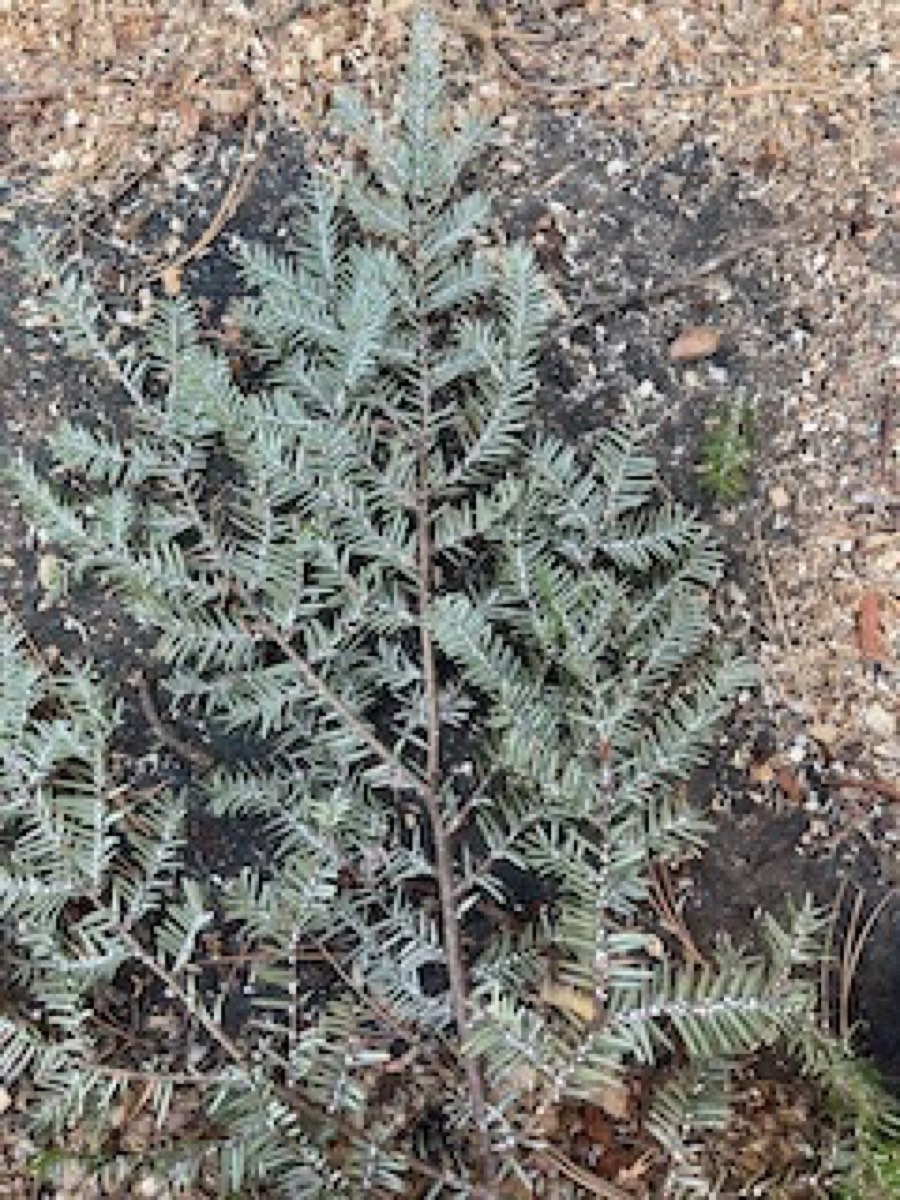
If you spend time in the woods around Ossipee Lake or Province Lake, or if you have hemlocks on your property, you need to know about hemlock woolly adelgid. This small insect from Asia is spreading north through New England and has already been found in southern New Hampshire. It will reach Carroll County, and when it does, the hemlocks on your land will be at risk.
What makes this different from other pests is how specific it is. Hemlock woolly adelgid feeds on one plant: eastern hemlock. It doesn't touch spruce, fir, or any other conifers. It's an adelgid, not a scale or a true aphid, but it functions like an aphid on steroids. And unlike many tree pests that take years to cause obvious damage, HWA can kill hemlock groves surprisingly fast once the infestation becomes established.
Why Hemlocks Matter in Carroll County
Before you can understand why protecting hemlocks matters, you need to understand what they do. Eastern hemlock isn't just a pretty tree. It's ecologically critical in this region.
Hemlock groves create deep shade and moderate temperatures. This is crucial because many of the cold-water tributaries that feed Ossipee Lake, Province Lake, and Great East Lake run through or beside hemlock forest. The shade from hemlocks keeps the water cool, which is essential for brook trout and other cold-water species. In places where hemlock has been removed or has died from other causes, water temperatures rise measurably.
Hemlocks also anchor steep slopes with their shallow, wide-spreading root systems. They stabilize streambanks and prevent erosion. In wetland areas, hemlock helps regulate water levels. They provide dense year-round cover for deer, birds, and other wildlife. In winter, when deciduous trees are bare, hemlocks provide shelter and browse that allows animals to survive the season.
Large-scale loss of hemlocks in this region would change the hydrology of our streams, warm the water feeding our lakes, reduce wildlife habitat, and destabilize slopes. This is not an abstract concern. It's already happened in southern New England, and the ecological consequences are significant.
What Hemlock Woolly Adelgid Actually Is
Hemlock woolly adelgid is a tiny insect, about the size of a pinhead. It's an aphid-like creature that feeds exclusively on hemlock by inserting its mouthparts at the base of the needles and drawing out the starch reserves stored there. The tree relies on these reserves to fuel growth and recovery from stress.
The "woolly" part of the name comes from the white, waxy coating that females produce around their eggs. This coating is water-resistant and protects the eggs over winter and through harsh conditions. It's also how you identify the problem.
How to Identify Hemlock Woolly Adelgid
This is the most important skill to develop if you have hemlocks on your property. Early detection can mean the difference between saving a tree and losing it.
Look at the undersides of hemlock branches, particularly the inner, shaded portions of the tree. You're looking for tiny white, cotton-like or woolly masses at the base of needles. These are the egg masses. In a healthy, uninfested hemlock, you won't see these at all. In an infested tree, they're visible to the naked eye and become more obvious the longer you look.
The woolly masses are present most of the year, so you can check for them in any season. Late winter and early spring, when the trees are leafless or just beginning to bud, may be the easiest time to spot them because you can see the branch structure more clearly.
Signs of Hemlock Woolly Adelgid Damage
Early signs of HWA damage are subtle and easy to miss. The first visible change is usually a shift in the color of the foliage. Needles gradually become a dull, grayish-green instead of the rich dark green of a healthy hemlock. This discoloration often starts on the lower and inner portions of the crown, where the pest infestation was longest established.
As the damage progresses, needles begin to drop prematurely. Healthy hemlock needles typically persist for 8 to 10 years. In an infested tree, they may drop after 2 to 3 years. The crown becomes progressively thinner and more open. Branches that normally would be densely clothed in needles become visibly sparse.
In spring, look for failed bud development. Normally, hemlock buds break and produce new growth. In a heavily infested tree, many of the buds fail to open, resulting in sparse, stunted new growth instead of the vigorous spring flush.
By the time obvious crown thinning is visible, the infestation has often been building for 1 to 2 years. This is why monitoring for woolly masses is so much more valuable than waiting for visible damage. Once the tree shows significant decline, the damage is extensive and recovery is less certain.
Treatment Options
If you find hemlock woolly adelgid on your hemlocks early, several treatment options exist.
Trunk injection using dinotefuran or imidacloprid is the preferred approach for properties near water. These systemic insecticides are injected directly into the tree's vascular system, where they circulate and poison the adelgids feeding on the needles. The active ingredient stays contained within the tree, doesn't enter the soil, and doesn't contaminate groundwater or surface water. Residual effectiveness typically lasts 2 to 3 years. For lakefront properties or properties with shallow water tables, this is the method we recommend.
Soil application or basal drench using imidacloprid is effective but less ideal for properties near water or with permeable soils, because some of the product remains in the soil where it can leach or move with water.
Foliar spray is an option for young trees or heavily infested smaller branches but is impractical for large, mature hemlocks.
The Importance of Treatment Timing
If you decide to treat, timing matters significantly. The most effective window for treatment is in the spring when the adelgids are actively reproducing and feeding, or in the fall before they enter dormancy. A treatment in June, for example, will provide protection through much of the growing season. A treatment in October will carry through the winter and provide protection the following spring and summer.
Monitoring after treatment is essential. Most trees will show improvement within the first year if the treatment is working. Needles will retain their color better, and new growth will be more vigorous. Repeat treatments at 2 to 3-year intervals may be necessary for long-term protection.
Prevention and Early Detection
The most cost-effective approach is prevention through early detection. If you have hemlocks on your property, plan to check them annually for woolly masses, starting in late winter or early spring when they're most visible. This takes only a few minutes per tree and can catch an infestation while it's still in early stages.
If you find woolly masses, contact us or another qualified tree care professional immediately. A tree caught in its first or second year of infestation is far more likely to recover with treatment than one where the pest has been feeding for 5 years.
The Broader Picture
Hemlock woolly adelgid is one of the reasons why diversifying tree species on your property makes sense. A landscape with a mix of tree species is more resilient than one dominated by a single type. At the same time, for the hemlocks that are already part of your property's ecosystem, protecting them through early detection and treatment is worth the effort.
Concerned About Your Hemlocks? Let's Take a Look.
We can inspect your hemlocks for woolly adelgid, discuss treatment options, and help you protect these important trees.